Article
The Essential Checklist for Selling Your Small Business
Share this post

So you’ve decided to sell your small business, and now you’re facing a challenging task - a smooth changeover that maximizes your sale price. You’ll need to assemble a team of professionals, including an attorney, accountant, and business broker, to guide you through the process.
But before you start, take a step back and ask yourself why you’re selling in the first place. Is it burnout, financial struggles, or a new opportunity? Identify your motivations. This will help you set clear goals and prioritize your next steps. That’s only the beginning though.
This article will help guide you through everything you need to know (and do) when selling your small business. Let’s go.
Key Takeaways
- Identify clear reasons for selling your small business to build trust with potential buyers and articulate motivations in the Confidential Information Memorandum.
- Assemble a professional team including a business broker, attorney, and accountant to facilitate valuation, negotiation, and compliance with legal obligations.
- Conduct a business valuation using Income, Market, and Asset Approaches to determine business worth, typically 3-5 times EBITDA.
- Enhance the business’s appearance by making essential repairs, organizing facilities, and updating agreements to boost attractiveness to potential buyers.
- Prepare comprehensive marketing materials, including a Confidential Information Memorandum, to showcase financial performance, strengths, and market positioning.
Identify Reasons for Selling
As mentioned, when it comes to selling your small business, you need to understand your motivations. Clearly articulate your reasons for selling, as this will help identify suitable buyers and facilitate transparent discussions during the sales process.
Your personal motivations, such as retirement, financial gains, or pursuing new opportunities, can greatly influence the type and value of buyer you attract.
Document your reasons for sale, as this forms an important part of the Confidential Information Memorandum (CIM). This will streamline buyer evaluations and foster trust.
If your personal goals are aligned with the sale outcome, this can maximize the sale price, as potential buyers are often interested in the seller’s motivations and future intentions. A well-defined rationale for selling can also improve credibility with buyers, as vague or uncertain motives may raise concerns about the business’s future stability.
Gather Professional Team
As you begin the process of selling your small business, you need to assemble a team of seasoned professionals to guarantee a successful transaction.
You’ll want to gather a team that includes a business broker, attorney, and accountant, each bringing their unique expertise to the table.
- A business broker will help facilitate the valuation and negotiation process, connecting you with potential buyers in your industry. They’ll also provide valuable insights into the market and help you traverse the sales process.
- Your attorney will review purchase agreements, guarantee compliance with legal obligations, and protect your interests during negotiations.
- Your accountant will guarantee that your financial statements are accurate and normalized. This shows the true financial health of your business to potential buyers.
With a professional team in place, you’ll be better equipped to properly go through the sales process the right way and maximize your business’s selling price.
Conduct Business Valuation
A professional business valuation is obviously a necessary step in the process of selling your small business. It provides an objective assessment of your business’s worth, which typically reflects a multiple of earnings ranging from 3 to 5 times EBITDA (earnings before interest, taxes, depreciation, and amortization).
To conduct a detailed business valuation, you’ll need to gather financial documents such as profit and loss statements, balance sheets, and tax returns from the last 3-5 years.
You can use various valuation methods, including the Income Approach, Market Approach, and Asset Approach. Each considers different aspects of your business’s performance and market conditions.
Seller’s Discretionary Earnings (SDE) is also a significant metric in the valuation process. It highlights the true earnings available to you after adjusting for non-recurring expenses.
Engaging a professional appraiser can cost between $5,000 to $30,000, but it often leads to better pricing and sales outcomes.
Conducting a thorough business valuation will give you a clear understanding of your business’s market worth. This, in turn, will help you set a competitive price and negotiate with potential buyers.
Formalize Agreements
Solidifying the foundation of your business sale starts with formalizing agreements that can make or break the deal. You’ll want to guarantee that all verbal agreements are documented in writing to prevent future obstacles.
- Start by reviewing and formalizing contracts with suppliers and distributors. This will provide confidence to prospective buyers about existing provider relationships and guarantee a seamless business transfer.
- Next, update employee agreements and benefit terms to reflect current operational conditions. This will help avoid complications during buyer negotiations.
- Don’t forget to document agreements for intellectual property rights and partnerships that could affect business operations. Clear documentation will inform buyers of existing contractual obligations.
- You should also review and document customer contracts, as they can greatly impact the value of your business and the buyer’s decision-making process.
Enhance Business Appearance
When it comes to showcasing your business to potential buyers, looks matter. That’s why enhancing its appearance can make all the difference in securing a sale.
You want to make a great first impression, and that starts with cleaning and organizing your facilities. A tidy and well-maintained space not only shows you care about your business but also makes it more attractive to buyers.
Conduct essential repairs - like maintenance on vehicles and property - to demonstrate your commitment to upkeep. This will increase buyer confidence in your business’s longevity.
Upgrading aesthetics, such as fresh paint or improved landscaping, can also make a notable impact on the perceived value of your business. All of these small investments can add up and encourage higher offers, and they make your business stand out from the competition.
Identify Ideal Buyer
Meticulously evaluate potential buyers to find the right fit for your business. Contemplate their financial capabilities, business experience, and strategic fit with your company’s operations to guarantee a seamless shift and continued success.
- Start by defining your buyer criteria, such as industry experience, willingness to retain staff, and growth potential. This will facilitate a more streamlined search for a suitable match.
- As you identify your ideal buyer, think about the different types of buyers that may be interested in your business, including competitors, private equity firms, strategic investors, or individual entrepreneurs. Each brings different motivations and resources to the acquisition process.
- Utilize insights from your business broker to gauge market demand and identify effective channels for reaching likely buyer segments based on your industry and business model.
- Create a detailed profile of your ideal buyer, including target size, geographic interests, and previous acquisition histories, to target your outreach efforts effectively.
Prepare Marketing Materials
As you move forward with the sale of your business, developing an extensive marketing strategy will attract the right buyer. To effectively market your business, prepare marketing materials that showcase its unique value proposition and potential for growth.
First, create a Confidential Information Memorandum (CIM) that provides a detailed overview of your business, including its financial performance, operational strengths, and market positioning.
When preparing your marketing materials, be sure to include detailed financial statements from the last three years, along with projections, to give prospective buyers a clear understanding of your business’s fiscal health.
You should also create a visually appealing branding package that highlights your business’s market presence and appeal.
Outline specific accomplishments and milestones, such as customer growth rates and industry recognition, to demonstrate your business’s competitive advantage.
Don’t be lazy about this. Taking the time to prepare thorough marketing materials is an important part of attracting the right buyer and securing a successful sale.

Resolve Legal Issues
The sale of your small business is a complex process, and it’s necessary to resolve any outstanding legal issues.
Tackle these issues head-on to avoid complications during the sale process. Ignoring them can deter potential buyers or negatively impact the sale price.
You’ll need to get your house in order and address the following legal issues:
- Update licenses and permits: Confirm all business licenses and permits are up-to-date and compliant with local, state, and federal regulations.
- Resolve pending lawsuits: Review and resolve any pending lawsuits or legal disputes that could affect the sale of your business.
- Disclose employment agreements: Compile and disclose all employment agreements and contracts, including obligations to current employees, to provide transparency and avoid future legal liabilities.
Create Inventory List
Your business’s inventory is the backbone of its operations, and you ought to present a thorough list to potential buyers. This list should detail all tangible assets, including furniture, equipment, and raw materials, to aid in accurate valuation and buyer awareness.
Don’t forget to document intangible assets like intellectual property, trademarks, and copyrights, as these can greatly influence the perceived value of your business.
When creating your inventory list, include quantities, conditions, and locations for each item to provide potential buyers with a clear understanding of what’ll be included in the sale.
Confirm the list aligns with your financial documents. This will make the verification smooth and mitigate disputes during the sale process.
Regularly update the list to reflect recent acquisitions or disposals, for accuracy and transparency’s sake. Potential buyers will appreciate this.
A thorough inventory list helps establish trust with buyers and demonstrates your business’s value.
Review Business Records
Files stacked high with financial records, contracts, and licenses sound like the opposite of a fun time. But, they hold the key to a smooth business sale.
Assemble a thorough collection of financial documents, including profit and loss statements, balance sheets, and tax returns from the last three years. This guarantees transparency for potential buyers and helps them understand your business’s financial health.
As you review your business records, pay attention to the following important documents:
- Financial records: Profit and loss statements, balance sheets, and tax returns from the last three years.
- Legal documents: Articles of Incorporation, operating agreements, and any relevant contracts or agreements that impact business operations.
- Business licenses and permits: Compliance with industry regulations is important to buyers and may affect the sale process.
Get these documents organized. It’ll provide a clear overview of your business’s financial situation, legal standing, and compliance with industry regulations.
This, in turn, will give potential buyers confidence in their purchasing decision. Reviewing your business records will equip you to better address any questions or concerns buyers may have.
Prepare Confidentiality Agreements
As you begin the process of selling your small business, protecting sensitive information from potential buyers is a top priority. Confidentiality agreements (CAs) ensure that proprietary details aren’t disclosed to competitors. Craft a clear and thorough CA that defines what constitutes confidential information and outlines the obligations of all parties involved.
A well-structured CA should also include non-disclosure agreements (NDAs) with consequences for breaches to deter potential violations. Customize your CA to fit your specific business context and industry. Generic terms may not be good enough as they don’t always adequately cover unique business disclosures.
With a solid CA in place, you can confidently share sensitive information with potential buyers and have peace of mind that your business’s proprietary details are protected.
Negotiate Purchase Agreement
Negotiating a Purchase Agreement is (obviously) not optional. It sets the terms of the sale and guarantees a smooth transaction for both parties.
You’ll want to verify that the agreement includes essential elements such as a clear description of the business being sold, the assets included in the sale, and any liabilities the buyer will assume.
Don’t forget to outline specifics regarding the transfer period, including any seller financing options or earn-out provisions.
When negotiating the Purchase Agreement, pay attention to the following key items:
- Description of the Business: Clearly outline the business being sold, including its assets, liabilities, and any intellectual property.
- Payment Terms: Specify the purchase price, payment schedule, and any contingencies that must be met before the transaction is finalized.
- Transfer Period: Define the timeline for the transfer, including any deadlines for due diligence or financing contingencies.
Remember to have your attorney review the Purchase Agreement to verify compliance with applicable laws and to protect your interests throughout the transaction.
Prepare Closing Documents
Preparing the necessary closing documents is the final step in selling your small business. You’ll need to gather and prepare several key documents to finalize the sale:
- The Purchase Agreement is the most critical document. It outlines the sale terms and obligations of both parties.
- You’ll also need to prepare a Bill of Sale, which transfers ownership of tangible assets.
- Another one is the Transfer of Ownership document, which clarifies any changes in legal ownership.
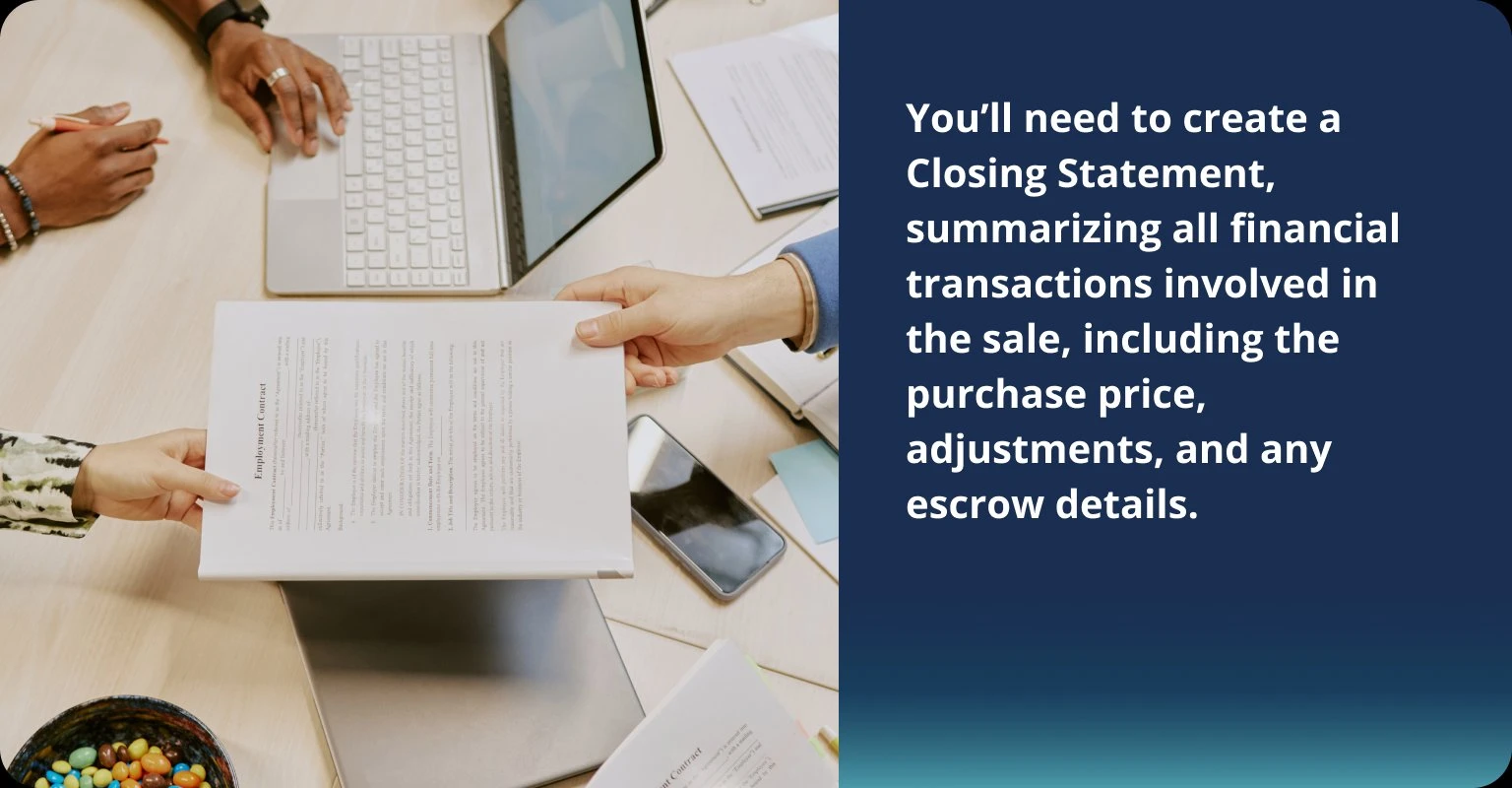
In addition to these documents, you’ll need to create a Closing Statement, summarizing all financial transactions involved in the sale, including the purchase price, adjustments, and any escrow details.
Confirm that all necessary state and federal transfer documents, such as IRS filings, are completed to maintain compliance with legal requirements.
Some closing documents, particularly those that transfer property or significant assets, may require notarization to confirm legal validity and protect all parties involved.
Make sure to review and verify the accuracy of each document to avoid any last-minute issues or disputes.
Notify Employees and Stakeholders
You’ve prepared the necessary closing documents, and now it’s time to focus on the people affected by the sale. Notify employees and stakeholders about the sale and its terms. Timely notification can help alleviate anxiety and uncertainty, which reduces the risk of increased turnover rates during the changeover.
When you notify employees, do your best to communicate clearly and transparently. You want to foster trust and make them feel included and secure about their positions.
Here are three key points to reflect on:
- Schedule a meeting: Hold a meeting to discuss the sale with employees. Allow for a QA session that addresses their concerns and reinforces the company’s ongoing commitments.
- Explain the reasons for the sale: Share the motivations behind the transaction to deal with rumors and misinterpretations.
- Provide regular updates: Keep employees informed about key milestones in the sale process to maintain morale and productivity while reducing the likelihood of misinformation spreading.
Plan Post-Sale Transition
A 30- to 90-day post-sale change period is typical for most small business sales. During this time, you’ll work closely with the buyer to guarantee a smooth handover of operations.
To make this process as seamless as possible, try to develop an all-encompassing shift plan that outlines the roles and responsibilities of both you and the buyer.
Summary
You’ve made it through the essential checklist for selling your small business. Follow these steps, and you will be well-prepared to navigate the complex process and achieve a successful sale.
You’ll have a solid understanding of your business’s value, a professional team to guide you, and a clear plan for change. Stay focused, and you’ll be on your way to a smooth and profitable sale that meets your goals.
References:
https://www.sunbelttexas.com/post/selling-a-business-checklist
https://www.batonmarket.com/resources/own/selling-a-business-checklist
https://jm.legal/articles/business/selling-a-business-checklist/
https://www.reidellawfirm.com/the-ultimate-checklist-for-selling-a-business-in-texas/
https://www.midstreet.com/blog/the-ultimate-checklist-for-selling-a-business
https://corporatefinanceinstitute.com/resources/valuation/cim-confidential-information-memorandum/
https://www.marcumllp.com/insights/income-asset-market-why-different-valuation-approaches-matter
https://goquantive.com/blog/valuation-basics-the-three-valuation-approaches/
https://missionpeakbrokers.com/small-business-sale-checklist/
Share this post

More Articles
The very best industry news & educational resources for your buying or selling journey.
Start Your Success Story Today
Discover how Dealonomy can help you sell your business for what it's truly worth, stress-free and on a timely schedule.